Source CE Certified Ultrasonic Pest Repellent for Home Hotel Warehouse
Compare 26 CE certified ultrasonic pest repellent options from verified suppliers. Buyers can evaluate models for mosquitoes, flies, and mice across living rooms, bedrooms, and warehouses with varying power and frequency specs; compare the available evidence and request quotations based on your requirements.
Key considerations
Products List


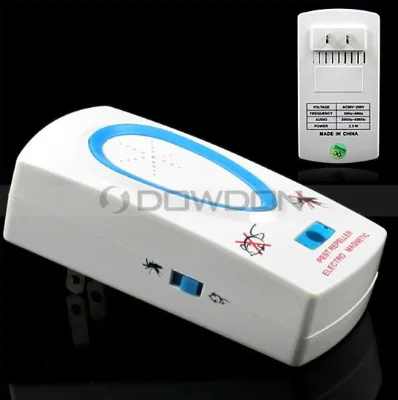


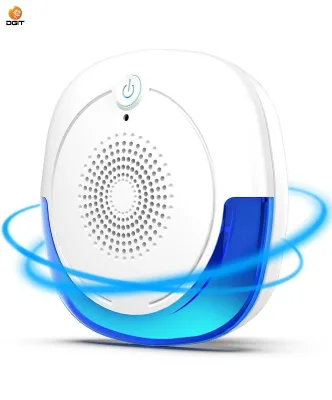
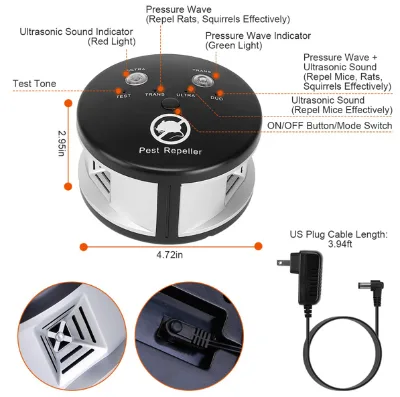
Comprehensive Sourcing Guide
CE Certified Ultrasonic Pest Repellent Sourcing Guide
Sourcing CE certified ultrasonic pest repellents requires a disciplined approach to verifying both electromagnetic compliance and actual pest control efficacy. Buyers must distinguish between devices that emit high-frequency sound waves and those using convertible frequency electromagnetic waves, as the underlying technology dictates performance in different environments. The observed market includes models targeting mosquitoes, flies, mice, and dust mites, often marketed for use in living rooms, bedrooms, warehouses, hotels, and restaurants. Understanding these distinctions is critical for aligning product selection with specific pest pressures and spatial requirements.
Procurement teams should prioritize suppliers who provide transparent technical data regarding frequency ranges and power consumption. Many listed units operate within a 25kHz to 60kHz audio range, while others specify a 50-60Hz frequency, which may indicate a different operational mechanism. Verification of the applying space, typically ranging from 50 to 100 square meters or specifically noted as 60 square meters, ensures the device covers the intended area effectively. Buyers must also confirm voltage compatibility, such as AC90-250V, to prevent electrical issues in diverse regional markets.
Product Scope and Observed Listing Signals
The current product landscape features a diverse array of ultrasonic and electromagnetic repellers, with observed prices ranging from $0.05 to $43 USD. Minimum order quantities vary significantly, starting from just one unit up to 30,000 pieces, catering to both small retailers and large-scale distributors. Common product types include mini ultrasonic pest repellents and electric traps, with some units featuring rechargeable batteries while others rely on direct plug-in power. This variability allows buyers to select models that fit their specific distribution channels and customer price points.
Visual and physical attributes also play a crucial role in product differentiation. Devices are often available in white or blue colors, with compact dimensions such as 10 x 5.2 x 2.5 cm and a weight of approximately 70g. Some listings highlight eco-friendly features or disposable components, while others emphasize customizable printing for private labeling. Packaging details typically include standard export cartons, with configurations like 120 pieces per carton or polybag additions, ensuring safe transit and efficient inventory management for global supply chains.
Technical Specifications to Verify
Technical verification must begin with the power supply and consumption metrics. Buyers should confirm whether the device is electric plug-in or rechargeable, as this impacts user convenience and long-term operational costs. Power ratings, such as 2.5W, indicate energy efficiency, which is a growing concern for environmentally conscious consumers. Additionally, the voltage range of AC90-250V suggests broad compatibility with international electrical standards, reducing the need for region-specific adapters or transformers during deployment.
Frequency and audio output specifications are equally critical for assessing performance claims. Devices often advertise frequencies between 25kHz and 60kHz, targeting pests beyond human hearing range. However, buyers must verify if the unit uses ultrasonic waves or convertible electromagnetic waves, as the latter may interact differently with household electronics. The applying space, typically cited between 50-100 square meters, should be cross-referenced with room layouts to ensure adequate coverage. Models like the MK-02 or FBUM01 offer specific form factors that may suit different installation scenarios.
Compliance and Safety Documentation
CE certification is a mandatory requirement for selling ultrasonic pest repellents in the European Economic Area, ensuring adherence to health, safety, and environmental protection standards. Buyers must request valid CE certificates from recognized notified bodies, verifying that the documentation matches the specific model numbers and batch codes. The presence of ROHS compliance further indicates that the device is manufactured without restricted hazardous substances, aligning with global environmental regulations and enhancing marketability in eco-conscious regions.
Beyond regulatory compliance, buyers should assess the robustness of the supplier’s quality management systems. While some suppliers claim ISO 9001:2015 certification, this should be treated as a background indicator rather than a guaranteed fact for every listed product. Documentation should include test reports for electromagnetic compatibility (EMC) and low voltage directives, ensuring the device does not emit harmful interference or pose electrical hazards. Clear labeling of origin, such as Guangdong, China, or Ningbo, aids in traceability and customs clearance processes.
Cost Drivers and Commercial Terms
Pricing for ultrasonic pest repellents is influenced by production volume, customization options, and component quality. The observed price range of $0.05 to $43 USD reflects significant variation based on features like rechargeability, material quality, and packaging complexity. Buyers negotiating large orders can leverage economies of scale, with minimum order quantities starting as low as one piece for samples but extending to 30,000 for bulk production. Understanding these tiers helps in forecasting margins and managing cash flow effectively.
Commercial terms also include production lead times and payment structures. Typical production times range from 15 to 20 days, depending on order size and customization requirements. Payment terms often involve Telegraphic Transfer (TT), requiring careful management of deposit and balance payments to mitigate financial risk. Buyers should also consider logistics costs, as packaging dimensions like 403527cm impact container loading efficiency. Clear agreements on delivery details and incoterms are essential to avoid unexpected shipping expenses or delays.
Supplier Qualification and Quality Control
Supplier qualification begins with verifying manufacturing capabilities and customization options. Many suppliers offer private mold services, although some explicitly state that private molds are not available, limiting branding flexibility. Buyers should assess the supplier’s ability to handle customized printing and packaging, which are key differentiators in competitive markets. Requesting samples is crucial to evaluate build quality, frequency output, and overall durability before committing to large orders.
Quality control processes must be rigorously defined to ensure consistent product performance. Buyers should implement pre-shipment inspections to verify that units meet specified dimensions, weight, and functional criteria. Checking for defects in electrical components and ensuring proper sealing of rechargeable batteries can prevent field failures. Collaborating with suppliers who have established quality assurance protocols reduces the risk of receiving non-compliant or defective goods, protecting brand reputation and customer satisfaction.
Long-Term Procurement Checks
Long-term success in sourcing ultrasonic pest repellents depends on continuous monitoring of product performance and market feedback. Buyers should track customer complaints related to efficacy, particularly regarding specific pests like mosquitoes or flies, to identify potential gaps in product design. Regularly reviewing supplier performance metrics, such as on-time delivery rates and defect percentages, helps maintain a reliable supply chain. Adjusting order volumes based on seasonal demand fluctuations ensures inventory levels remain optimized.
Additionally, staying informed about evolving regulatory requirements and technological advancements is essential. As pest control technologies evolve, newer models may offer improved frequency ranges or broader pest coverage. Buyers should engage in ongoing dialogue with suppliers to explore new product developments and potential upgrades. Maintaining a diversified supplier base can mitigate risks associated with single-source dependencies, ensuring business continuity and competitive pricing in the dynamic pest control market.
FAQs
What certifications do these repellents have?
The products hold CE and ROHS certifications, ensuring compliance with safety and environmental standards. This allows buyers to source devices that meet regulatory requirements for export to various international markets without additional testing burdens.
Can the device handle large indoor spaces?
Yes, the applying space ranges from 50 to 100 square meters for certain models. Other units cover approximately 60 square meters, making them suitable for living rooms, bedrooms, warehouses, and hotels depending on the specific model selected.
Is the unit rechargeable or plug-in?
Options include both rechargeable and electric plug-in models. The electric version operates on AC 90-250V with a power consumption of 2.5W, while rechargeable variants offer portable usage without constant wiring requirements for different application scenarios.
What is the typical delivery time?
The standard delivery detail is 15 days for most orders. Some customized or specific production runs may require up to 20 days, so buyers should confirm lead times with suppliers to align with their inventory planning schedules.
Are custom branding options available?
Customization is available for branding and printing needs. Buyers can request customized logos or packaging details, allowing for private label solutions that integrate seamlessly into their existing product lines and marketing strategies for distinct market positioning.
What is the minimum order quantity?
The MOQ ranges from 1 to 30,000 units depending on the supplier and product type. This flexibility supports both small trial orders and large-scale bulk purchases, accommodating various business sizes and inventory requirements effectively.